ApnaTube Android App ab available hai.
Videos dekhiye, points earn kijiye aur apna content upload kijiye. Download App: https://play.google.com/store/apps/details?id=com.apnatube.in
क्लिपो सृजन करना
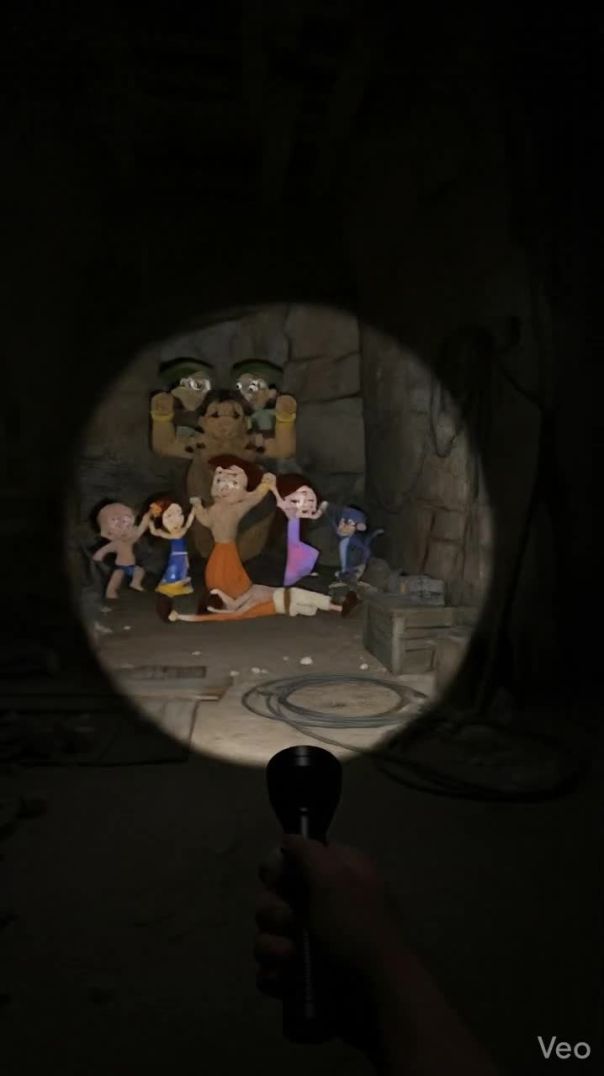
Use the uploaded image as an exact reference. Preserve original proportions, materials, colors, textures, and facial features. No redesign or stylization.
POV inside an abandoned cave. The viewer holds a flashlight, casting a single circular beam while everything else fades into darkness.
The beam reveals the character sitting on the ground, as if left behind after filming. The character feels completely lifeless and inactive—no pose, performance, or presence. If it’s a puppet or costume, show no hands, rods, strings, or person inside.
The character looks old, dirty, and neglected: worn fabric, dust buildup, stains, discoloration, and damage. The environment is abandoned, with dusty surfaces, old filming equipment, cables on the floor, and faded set pieces.
Dust floats in the beam.
Sequential Moments (implicit, not labeled): create a 5 scene.
• The first moment shows the entrance of the abandoned filming location, no character visible yet, only a doorway or corridor leading deeper into darkness, creating anticipation.
• The second moment reveals only part of the character at the edge of the flashlight beam — a damaged, dirty face or feature barely visible, creating an uncanny sense of recognition.
• The third moment shows the full character slumped against a wall or lying on the floor, surrounded by debris and old equipment, as if it was left behind immediately after filming ended.
• The fourth moment moves closer, focusing tightly on the character’s face, showing heavy wear, cracks, dirt, and hollow, lifeless eyes isolated in the flashlight beam.
• The final moment pulls back, placing the character farther away, small and isolated within the darkness, emphasizing abandonment, silence, and finality.
Tone & Mood:
Eerie, melancholic, unsettling, and quiet. This is not a jumpscare or action horror scene — it should feel like discovering forgotten evidence rather than encountering a threat. The horror comes from nostalgia, decay, and abandonment.
Hard Rules:
No movement. No animation. No cinematic poses. No monsters. No glowing eyes. No exaggerated horror elements. No text in the image. No humans visible.
The result should feel like a real, accidental discovery captured in a single haunting visual narrative.
always add the full image description on all the prompt
Radhe Krishna Discipleship" refers to the spiritual path focused on the devotional service (Bhakti) of the divine couple, Radha and Krishna. This concept is central to various Vaishnava traditions, particularly Gaudiya Vaishnavism (which includes ISKCON - the International Society for Krishna Consciousness).
Here is a breakdown of what "Radhe Krishna Discipleship" generally entails:
1. Core Philosophy: Radha and Krishna
* The Divine Couple: Radha and Krishna are seen as the supreme feminine and masculine aspects of Godhead.
* Krishna is considered Svayam Bhagavan (the Supreme Personality of Godhead).
* Radha is considered the Hladini-Shakti (pleasure potency) of Krishna and the original Supreme Goddess. She personifies the perfect loving devotion (Mahabhava).
* The Goal: The ultimate aim is to develop Prema (pure, selfless love for God) and attain the bliss of serving Radha and Krishna in the spiritual world (Gokula or Vrindavan).
2. Practices and Teachings (Bhakti Yoga)
The discipleship path focuses on Bhakti-Yoga (the yoga of devotion), guided by a spiritual teacher (Guru or Sathguru).
* Nama-Sankeertanam/Japa: The most important practice, especially in Kali Yuga, is the constant chanting of the Lord's names. This includes:
* Kirtan: Congregational singing and chanting of the Hare Krishna Maha-Mantra and other sacred names.
* Japa: Meditative repetition of the mantra on a string of beads (like a mala).
* Satsangam: Association with other devotees and the Guru, which helps in spiritual progress.
* Seva (Service): Engaging in devotional service to Radha and Krishna and their devotees, such as temple worship, cooking, book distribution, and community work.
* Following the Guru's Instructions: A disciple learns to surrender to the spiritual master and follows their guidance and instructions (vani-seva). The Guru is considered a representative of Radha and Krishna.
3. Discipleship in ISKCON
In the International Society for Krishna Consciousness (ISKCON), a formal process is established for initiation (discipleship):
* Preparation: A devotee typically begins by following basic devotional practices like chanting 16 rounds of the Hare Krishna mantra daily and adhering to four regulative principles (no meat-eating, no intoxication, no illicit sex, and no gambling).
* ISKCON Disciple Course (IDC): This is a mandatory training program that deepens the devotee's understanding of Guru-Tattva (the philosophy of the Guru) and the relationship between the disciple, the Guru, and the ISKCON organization.
* Initiation (Diksa): After a period of practice and study, the devotee selects a qualified ISKCON Guru and receives Diksa (initiation), formalizing their vow to follow the principles and the instructions of the Guru and the disciplic succession (parampara).
Discipleship in the Radhe Krishna tradition is essentially a commitment to cultivate a loving relationship with the Divine Couple through surrender, chanting, and devotional service.
Would you like to know more about the ISKCON Discipleship Course or the significance of Radha's role in the discipleship tradition?