close

Important Announcement
Title, thumbnail ya video me agar abusing, adult ya sexually explicit content paya gaya to channel bina kisi warning ke permanent delete kar diya jayega. Yeh rule turant lagu hai. Ab tak 350+ channels delete kiye ja chuke hain. Kripya kisi bhi prakar ka adult ya abusive content upload na karein. Rule violate hone par channel bina bataye delete ho jayega.


— Team ApnaTube

ショーツ 作成

##old is gold ## india best song ##

deepak

0

2

bam bam bhole

111182468764302781401

0

1

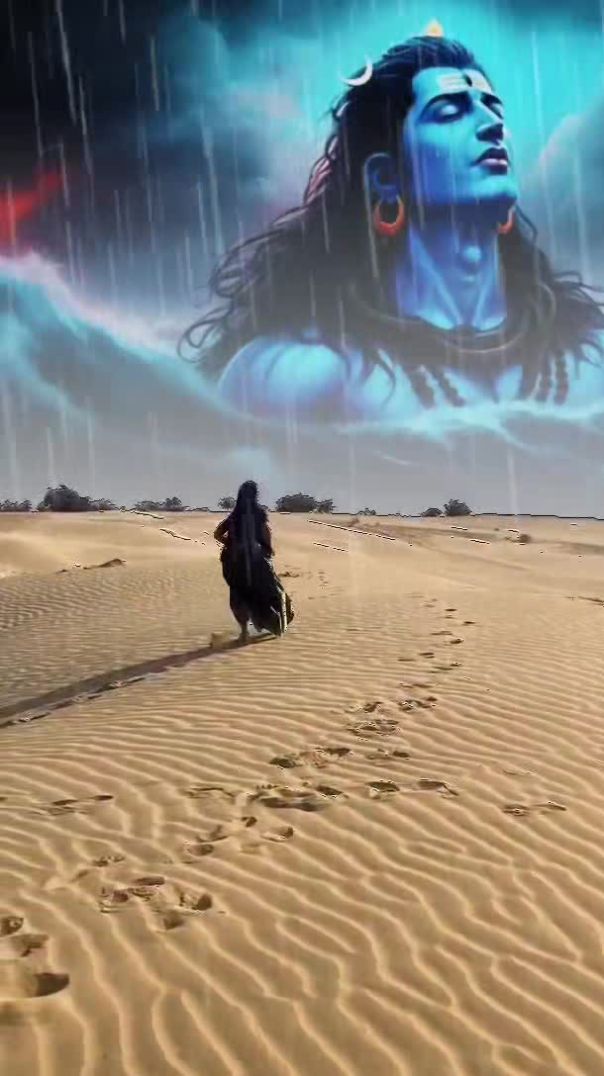
In the vast ocean of Hindu mythology, there are stories of love, devotion, sacrifice, and cosmic balance. But there are also moments when divine anger shakes the universe itself. One such powerful and emotional story is the tale of King Daksha’s Yagya, Sati’s sacrifice, and Lord Shiva’s terrifying rage — an event that nearly led to cosmic destruction.
This story begins with King Daksha, a powerful and proud ruler, and one of the sons of Lord Brahma. Daksha was known for his authority, discipline, and strict adherence to rituals. However, he carried a deep arrogance in his heart — especially toward Lord Shiva, whom he did not consider worthy of respect. Shiva, the great ascetic, lived a simple life, covered in ash, meditating in the Himalayas, far from royal luxuries. To Daksha, this did not look like the behavior of a “proper” god.
But destiny had already tied their lives together.
Daksha’s daughter, Sati, was deeply devoted to Lord Shiva. From a young age, she worshipped him with complete faith and love. Against her father’s wishes, she chose Shiva as her husband. Though the marriage was divine and pure, Daksha never accepted it. His ego remained wounded, and his anger toward Shiva continued to grow silently.
Time passed, and Daksha decided to perform a grand Maha Yagya — a massive sacred fire ritual to display his power, status, and spiritual authority. Kings, sages, and even gods from different realms were invited. The entire place was filled with divine chants, sacred fire, and royal splendor.
But there was one deliberate omission.
Daksha did not invite Lord Shiva.
This was not an accident — it was an insult.
When Sati heard about the great Yagya at her father’s palace, she wished to attend. Shiva gently warned her that going uninvited could lead to disrespect and pain. But Sati believed that a daughter never needs an invitation to visit her father’s home. Trusting her love and innocence, she went.
What she saw there broke her heart.
No one welcomed her warmly. Some looked away. Others whispered. And then Daksha himself insulted Lord Shiva openly, mocking his appearance, his lifestyle, and his place among the gods. He questioned how his daughter could have chosen such a husband.
Sati stood there, trembling — not with fear, but with emotional devastation. She realized she had made a mistake by coming. More than her own humiliation, she could not bear the insult toward Shiva — the one she loved and worshipped with all her soul.
Filled with pain, sorrow, and fierce dignity, Sati declared that she could not live in a body that came from someone who hated her lord. In a moment of unbearable grief and spiritual fire, she walked toward the blazing Yagya flames and gave up her life.
The entire assembly was shocked.
But far away in Mount Kailash, Lord Shiva felt the disturbance in the universe. Through his divine awareness, he saw everything that had happened. The calm, meditative god — the embodiment of detachment — was overcome with a grief and fury the cosmos had never witnessed before.
His sorrow turned into cosmic rage.
From a lock of his matted hair, Shiva created a terrifying and powerful warrior — Veerbhadra. Born from divine anger itself, Veerbhadra was unstoppable. With blazing eyes and immense strength, he stormed into Daksha’s Yagya like a living storm.
What followed was chaos.
The sacred ritual was destroyed. The fire altars were torn apart. The proud assembly of gods and kings fled in fear. Veerbhadra punished those who had supported Daksha’s arrogance and shattered the illusion of his power. The Yagya, meant to show spiritual greatness, ended in ruin.
The universe trembled under Shiva’s grief.
Seeing the destruction, the gods realized that if Shiva’s anger continued, it could lead to total cosmic imbalance. They approached Lord Vishnu and Lord Brahma, and together they went to calm Shiva. With folded hands and humble prayers, they reminded him of his role as the protector of balance, not just the destroyer.
Slowly, Shiva’s anger cooled.
In compassion, he forgave and restored balance. Daksha was given life again, but with humility learned through suffering. The universe returned to peace, but nothing was the same. Shiva, heartbroken, withdrew from the world in deep meditation, and the story of Sati’s sacrifice became eternal.
Later, Sati would be reborn as Goddess Parvati, and her love story with Shiva would begin again — proving that divine love can never truly be destroyed.
This story is not just about anger and destruction. It is about ego versus devotion, pride versus humility, and the truth that even gods must respect one another. It reminds us that arrogance leads to downfall, while love, sacrifice, and balance hold the universe together.
Through this cinematic retelling, we bring to life one of the most emotional and powerful chapters of Hindu mythology — a story where love sparked sacrifice, sacrifice sparked rage, and rage nearly shook creation itself.

TheJoyfulJiggle

0

2

virl song please sport ke

rs

0

3

comment kara

ai

2

20

this is dance video

kvdevenda

0

4