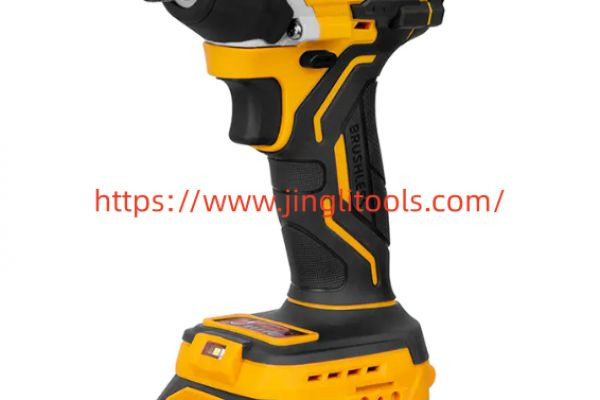
Power Wrenches are widely used in industrial assembly environments where controlled fastening, consistent torque application, and efficient workflow management are required. Engineers working in manufacturing, automotive production, equipment assembly, and mechanical installation often rely on powered fastening tools to support stable and repeatable operations. As production systems become more structured, the demand for efficient assembly tools continues to increase across various industries.
One of the main reasons engineers prefer powered fastening tools is the ability to improve assembly consistency. In production environments, repeated fastening tasks must be performed with uniform torque to ensure product quality and structural reliability. Manual tools may introduce variations in tightening force, while powered solutions help maintain more controlled application across multiple operations.
Another important factor is time efficiency. Assembly lines often involve repetitive tasks that require speed and accuracy. Using powered tools helps reduce manual effort and supports faster completion of fastening processes. This contributes to smoother workflow management in production environments where time control is an important part of operational planning.
Ergonomic considerations also influence tool selection. Engineers and operators may perform assembly tasks for extended periods, making comfort an important factor. Powered fastening tools help reduce physical strain compared to manual alternatives, supporting more comfortable working conditions during long production cycles.
Tool adaptability is another important aspect in industrial applications. Assembly tasks vary depending on equipment type, product design, and installation requirements. Powered tools are often designed to handle a range of fastening applications, making them suitable for different stages of production and maintenance work.
In automotive manufacturing, assembly processes require precise fastening of mechanical components. Controlled torque application is important for ensuring structural stability and product safety. Powered tools are commonly used in assembly lines to support consistent fastening across multiple vehicle components.
In machinery production, assembly operations often involve large equipment and complex mechanical structures. Powered tools help technicians manage fastening tasks in structured sequences, supporting both initial assembly and maintenance procedures. This improves workflow organization within production facilities.
Construction and infrastructure projects also rely on powered fastening tools during installation and equipment setup. Large-scale assembly tasks require tools that can handle repetitive fastening in different working environments. Portability and ease of use are important considerations in these applications.
Electronics and appliance manufacturing also use powered fastening systems for assembling components in controlled production environments. These settings often require consistent torque control to ensure product reliability and reduce assembly variation.
Jingli provides industrial tool solutions designed for assembly and production environments. By focusing on structured design and application suitability, the company supports fastening requirements across different industrial sectors.
As manufacturing systems continue to evolve, demand for efficient assembly tools remains stable across global markets. Engineers and procurement teams evaluate equipment based on operational requirements, workflow compatibility, and long-term usability. For more product information and industrial tool solutions, please visit https://www.jinglitools.com/